Home server, or how to destroy a proper PC case
So, I've decided to start my blog from the very base of it: the server that hosts this website.
The idea of having a home server had been chasing me for quite a while, and the need to host some uni projects and Minecraft servers only made it worse. For some time a Raspberry Pi cluster played this role, but that's a story for another post.
The parts
So one fine day I got my hands on a Huananzhi LGA2011-0 motherboard for cheap. The only issue was a broken M.2 slot, which I fixed easily. Since I already had a PC, the decision was made: this board would belong to my future home server. It would be quite stupid to spend a lot of money on a 15-year-old platform, so most parts were bought on AliExpress or used. Final configuration:
- CPU: Xeon E5-2680 v2
- RAM: 16 GB ECC DDR3 (I added 16 more later)
- Storage: 512 GB M.2 SSD (some used Samsung, idk)
- PSU: some random 350 W mini-ITX PSU from AliExpress (it was a mistake)
- Cooler: a low-profile CPU cooler (turned out better than I thought)
The case
The huge concern was the case. I wanted it to be relatively small, and my budget was enough for a banana box. The problem was that my board is ATX, and there aren't a lot of cases that are small, can fit an ATX motherboard and cost as much as a banana box.
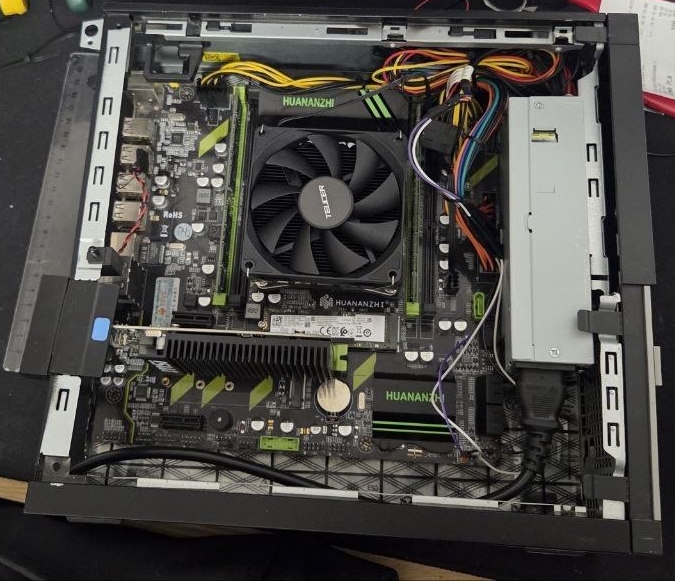
I lived with these thoughts for a couple of days, until an old Dell OptiPlex in my uni lab caught my eye. After some quick googling I discovered that it can fit my motherboard... at least physically. Of course, according to the specs its max is microATX, and, worth saying, a specific Dell microATX, so a regular motherboard won't fit... unless you have a drill and an angle grinder ;)
The case also has a specific front panel that makes it impossible to connect to a regular board. But who needs such weakness on a server, right? (Actually, I soldered the power button and the LED indicator to cables, so it was possible to connect them.)
After some 'professional' improvements to the case, I was able to fit everything inside:
Cooling this thing
As you can notice, it's quite cramped inside, and airflow there is more myth than reality. It didn't help that this bloody Chinese PSU was heating up enormously even without load, outside the case (can't say for sure, but like 70–75 °C). The issue was a broken built-in fan. After fixing it, things got much better, but still too hot to accept.
So I started precise, professional and efficient planning of how to cool this shit. I bought a bunch of smaller 40 mm fans, cause I didn't want to harm the visual look of the server. After a bunch of tests on where it's better to place these fans, I settled on this:
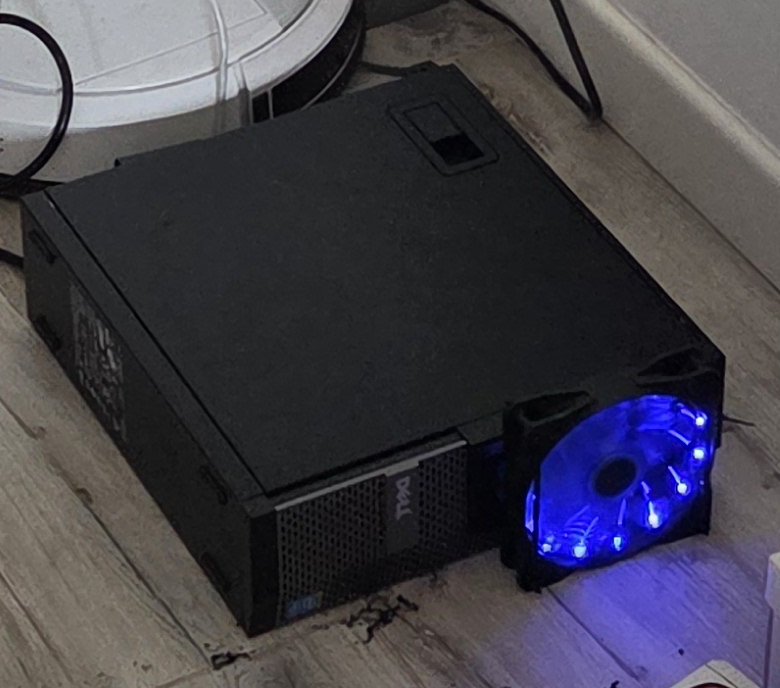
As you can probably notice, the visual look was harmed. But at least it was chill and quiet, so it sounded like a good compromise to me. Later I added one more 80 mm fan inside and a window (even with a dust filter!!!), so the CPU fan can get more fresh air:
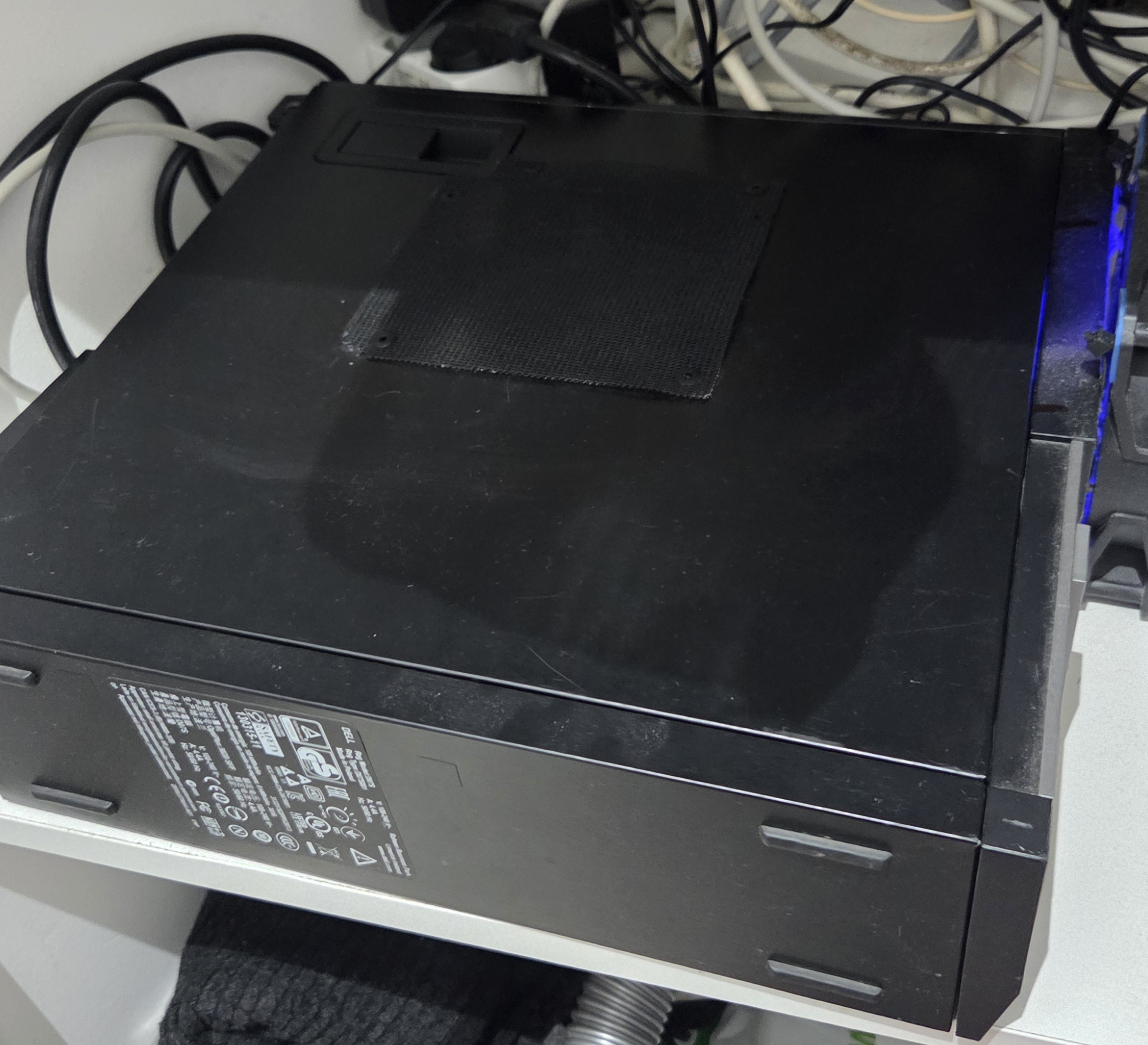
All of it gave a surprisingly good result: under 30 °C on the CPU without load (I believe it will be more in summer) and under 70 °C under load.
How it runs
I'm running Ubuntu Server on it. Overall performance surprised me: it handled a Minecraft server with the full Create modpack and 6 players online like it's nothing. Hosting small websites is no problem either, ofc. At some point I even hosted a local LLM on it (Qwen3.6 35B-A3B). The result was not fantastic, but not the worst either: around 20 t/s on reading and around 10 t/s on writing.
For under 500 zł, this build gives quite a lot of performance and fun, even though it's more than 10 years old ;)
Guestbook · 0 entries
No entries yet. Be the first to sign the guestbook!